SuperBrain AI Incubator · AI for Good

When Technology Has Heart,
The World Changes

Three AI social impact projects initiated by high school students. Not homework, not a competition — real people, real pain points, and real change.

Giving voice to people with dysarthria. Letting visually impaired children run free. Bringing the feedback of disabled users directly to every product team.

3 Social Impact Projects
30 Winter Camp Students
33 Mentor Navigators
85M People with Disabilities in China
17M Visually Impaired in China

SuperBrain AI Incubator

An education experiment exploring a new paradigm for the AI era — where passion drives creation, and young people learn by building things that matter in the real world.

"The Titanic has already hit the iceberg — credentials are losing their power, knowledge is being devalued, career paths are breaking down. SuperBrain's answer is not fear and competition, but passion and creation."
— SuperBrain AI Incubator founding philosophy

Mission: Empowering creation through passion in the AI era, reimagining education

Vision: Building a global education ecosystem that fuses real startup incubation with AI-empowered learning

AI Native Education

Not "education plus AI" bolted together, but learning natively within an AI environment — where young people tackle real social problems and discover how to co-create with AI. Every project starts with a real person and a real problem.

Learning Through Doing

Projects are the vehicle; growth is the destination. When a high school student who has never written a line of code builds an app in 7 days that helps visually impaired children — what changes is not just their technical skill, but their understanding of what they're capable of.

Coaching Culture: See · Respect · Act

Our 33 Mentor Navigators don't give answers — they help students see the problem, and see themselves. This culture of human-to-human impact is SuperBrain's most irreplaceable competitive advantage.

What kind of people should the AI era cultivate?

After three years of exploration, here is SuperBrain's answer:
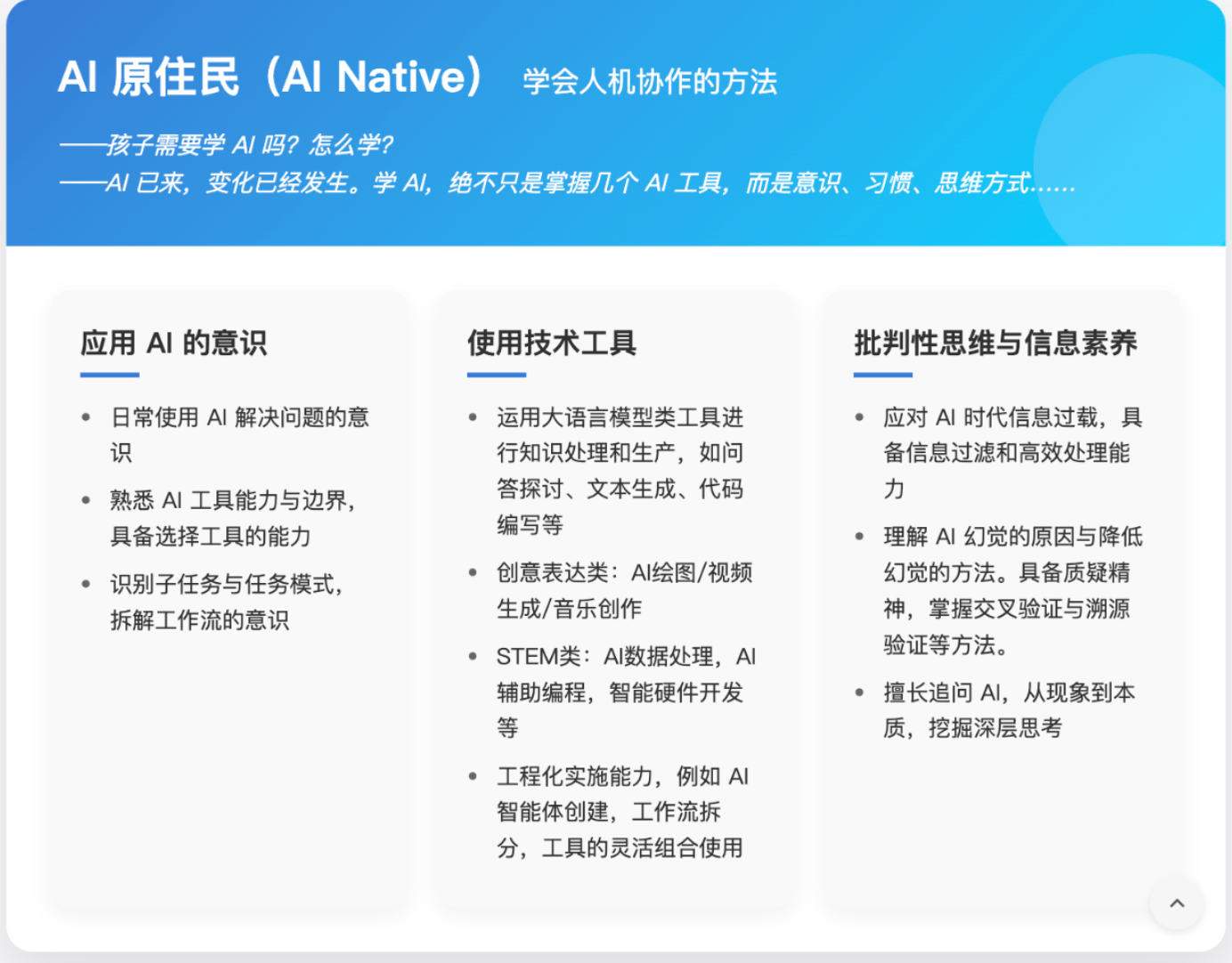
AI Native — mastering the art of human-AI collaboration
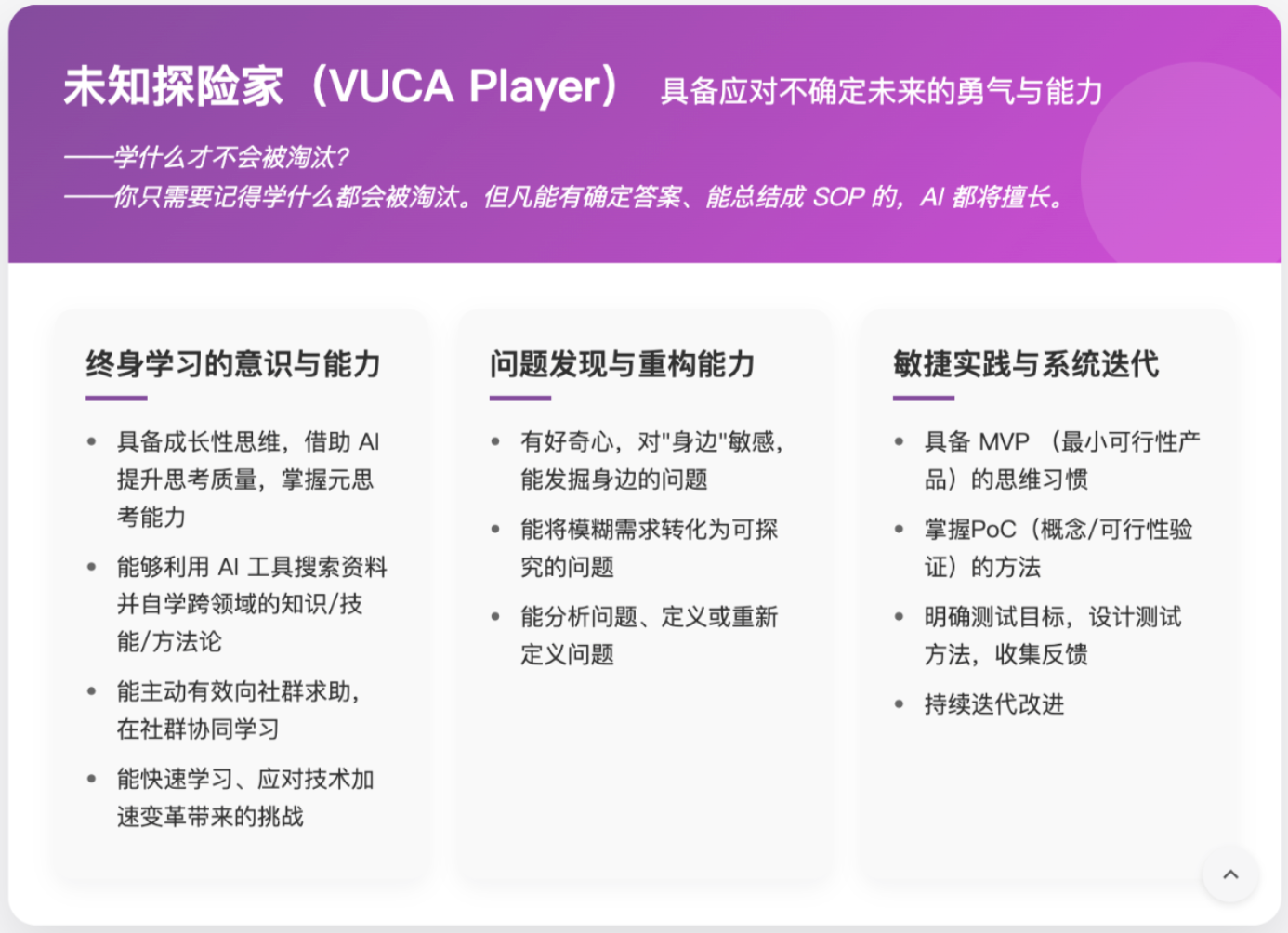
VUCA Player — courage and capability to navigate an uncertain future
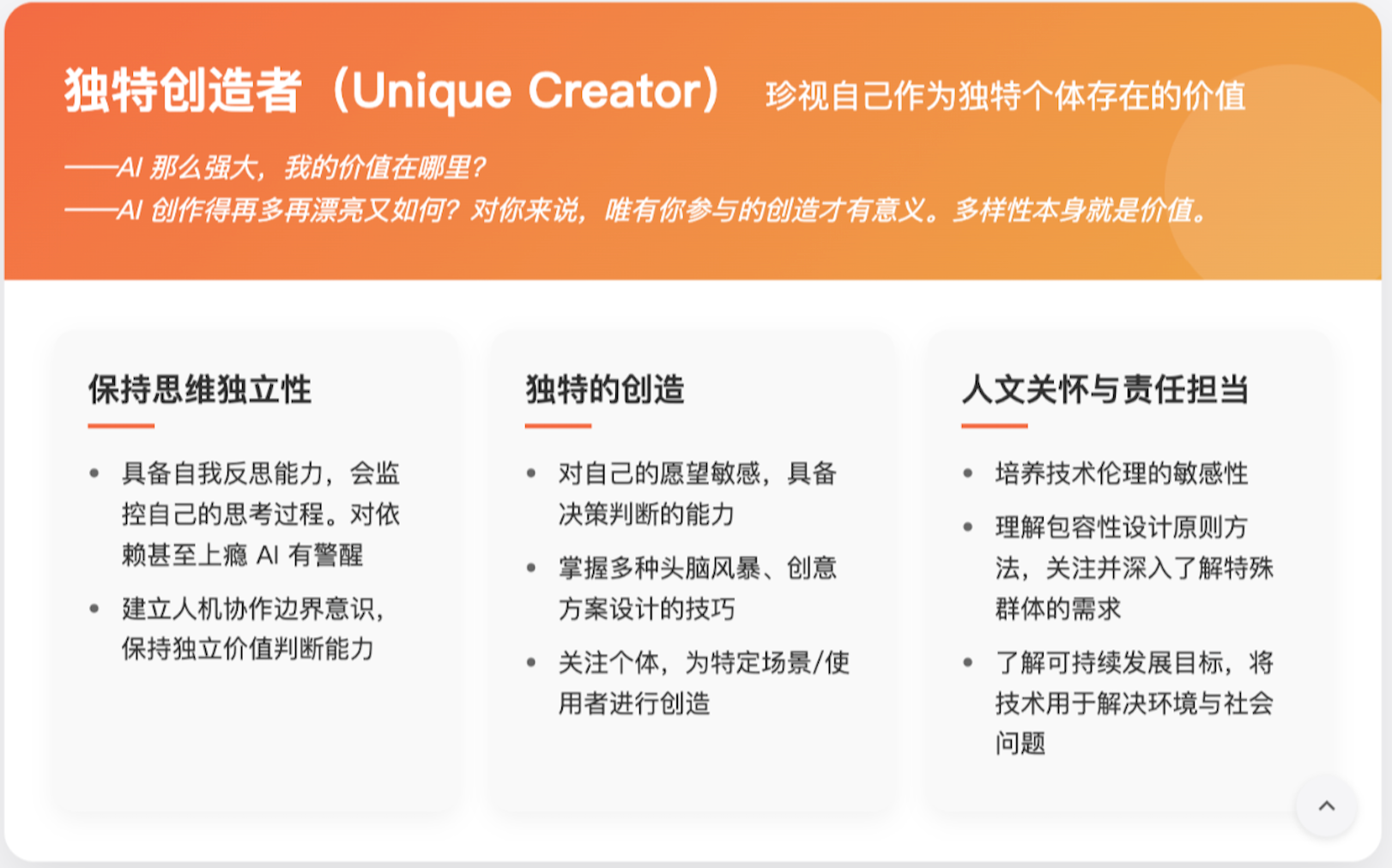
Unique Creator — embracing one's irreplaceable value as an individual

Four Years of Evolution: Getting Closer to the Heart of Education

2023

v1.0 — Summer Incubator

First attempt: letting high school students build real projects with AI

2024

v2.0 — AI for Good Hackathon

Pivoted to social impact: shifting from "what can we build?" to "what should we build?"

25–26

v3.0 — Deep Immersion · AI Winter Camp

30 students × 33 mentors, 7 days, 11 prototypes incubated (February 2026)

2026

v4.0 — Ecosystem Enablement

Three AI for Good projects enter full incubation, moving from prototypes to real users
Why AI for Good

AI for Good is SuperBrain's social innovation program. The camp is one expression of it — using education as an incubator, and the incubator as education.

AI for Good 2026 Winter Camp

AI for Good Winter Camp, February 2026

For Students

Solving real problems in the real world builds genuine purpose. Students evolve from "tool users" to "problem solvers," developing deep empathy through serving communities with disabilities.

For Social Innovation

Providing sustainable technical innovation for the social sector. Exploring how AI can support nonprofits in lasting ways and creating a replicable model for social impact through technology.

For Product Design

Inclusive design isn't just for a minority — it benefits everyone. When the voices of disabled users are heard, internet products become better for all of us.

February 2026 — 30 students (ages 12–17) × 33 mentor navigators, 7 days, focused on disability and accessibility, incubating 11 AI project prototypes.
Three partners who have worked in the disability sector for years brought their longest-standing, most stubborn unsolved problems.
The students weren't completing an assignment — they were searching for real answers, for real people.

Three Projects, One Belief

Each project starts from one person's pain — and responds with the warmth of AI technology.

ACCESSIBILITY VOICE

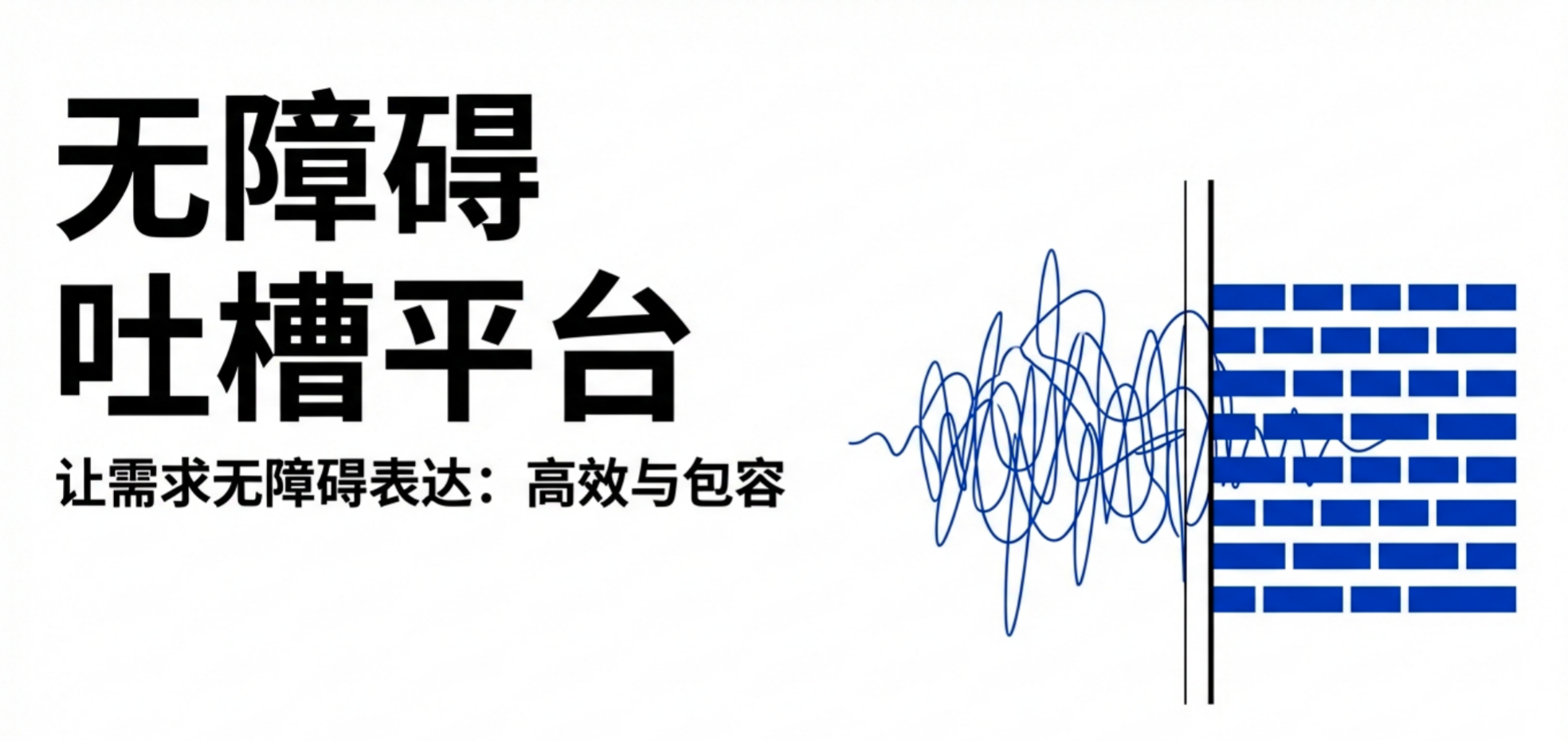
Accessibility Voice — Feedback Direct Channel

"Turning every complaint into a real accessibility improvement across the internet."

China has 85 million people with disabilities, plus roughly 300 million elderly — the internet's largest "silent user group." The internet usage rate among disabled people is only 38%, less than half the national average. As of June 2024, only 2,792 websites and apps had completed accessibility modifications — a negligible fraction of the millions of apps in existence.

Janna, an AI empowerment advocate for people with disabilities, hears the same line in every class she teaches: "There's no point reporting it — product managers will never see it." This isn't a technology problem. It's a systemic loss of voice.

Accessibility Voice uses AI to automatically classify user feedback across three dimensions — product, barrier type, and severity — generating structured, actionable reports that are then sent directly to product leads at Tencent, ByteDance, Alibaba, Meituan, and other major tech companies.

Accessibility Voice feedback platform

Solution Design

3-Dim
AI Classification System
AAA
WCAG Accessibility Standard
Direct
Channel to Product Teams
MVP
Live, in community beta
  • AI 3-dimension classification: Product × Barrier Type × Severity
  • Auto-generates structured feedback reports
  • WCAG AAA compliant + full screen reader compatibility
  • Ecosystem integration with Blind Runner Guide and Project Resonance
The Bigger Picture
For People with Disabilities
  • A dedicated channel for reporting accessibility issues
  • AI organizes feedback into structured reports
  • Reports go directly to product managers at major tech firms
For Product Teams
  • Direct, actionable feedback from real users
  • Lower cost of accessibility improvements
  • More inclusive products
For Everyone
  • Drives accessibility improvements across the internet
  • Makes the digital world friendlier for all
  • Today's inclusion is the best gift to our future selves

"A platform for reporting accessibility issues must itself be perfectly accessible — that's the most basic respect for its users."

— Design principle
BLIND RUNNER GUIDE

Blind Runner Guide — Volunteer Matching System

"Turning solitary runs into warm companionship."

China has 17 million visually impaired people, including around 8.7 million who are fully blind. What they face is not only physical limitation, but systemic isolation — not because no one wants to help, but because there is no trusted mechanism to connect those who need help with those who can give it.

Song Haifeng founded "A Beam of Light" ten years ago, guiding runners with a 15-centimeter tether rope. Over a decade, he built a network of 2,300 volunteers who have accompanied more than 600 visually impaired runners across 127 marathons. His dream: "I want a platform where parents of blind children can light up their location, and nearby volunteers can 'accept the request' and get matched — running together in this community for 5 years, 10 years."

The students are now writing that dream into code.

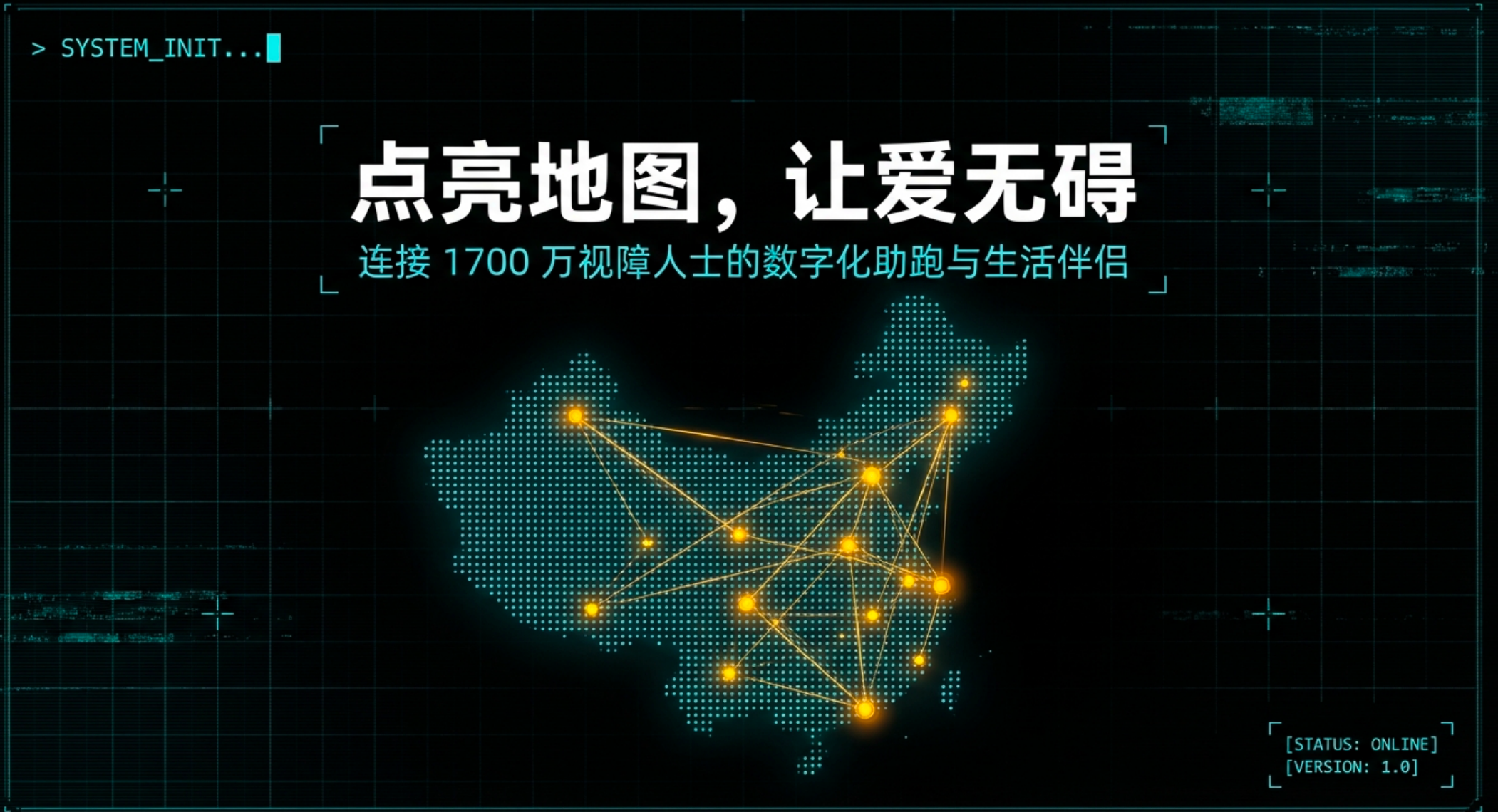
Light up the map, let love run free

Real Data

17M
Visually Impaired in China
2,300
Existing Volunteer Network
127
Marathons Completed
6 Teams
Building in parallel at Winter Camp
  • WeChat mini-program: intelligent matching between volunteers and visually impaired runners
  • Fully accessible design (screen reader compatible)
  • Safety features: real-time location sharing + emergency contacts
  • Cold-start advantage: 2,300-person volunteer network ready to onboard
The Bigger Picture

This "trusted human-to-human connection" mechanism is fundamentally applicable to any scenario requiring companionship-based volunteering — elderly mobility support, post-surgery care, safe school pick-up. Starting from the visually impaired community, this solves a much broader social problem.

"Even a small light can illuminate the path ahead. Not staying home out of fear, but walking out the door because you want to race."

— Song Haifeng
PROJECT RESONANCE

Project Resonance — Personalized Speech Recognition for Dysarthria

"Teaching machines to understand every subtle pronunciation."

China has approximately 8 million people with dysarthria — including those with ALS, cerebral palsy, Parkinson's disease, and other neurological conditions. Standard speech recognition fails them completely. It is like speaking into a world that will never understand you, no matter how many times you try.

But family members and close colleagues who spend enough time with someone develop a kind of unspoken fluency — an ability to understand what they're saying. Gao Shan, a visually impaired founder of a social enterprise accelerator, posed the question: Can AI learn that same fluency?

Huawei and Google have both attempted this — but Huawei's system only works for mild cases, and Google's personal model was never widely deployed. Chinese-language personalized speech recognition is virtually a blank space. Project Resonance aims to fill that gap. The team has completed an experimental v1.0 using Qwen ASR + CosyVoice voice cloning TTS, with plans to introduce LoRA fine-tuning for true personalized recognition.

Project Resonance

Key Stats

v1.0
Experimental complete, semantic recognition confirmed
5 min
Audio needed for voice cloning
LoRA
Next step: personalized fine-tuning
Blank
State of Chinese personalized ASR
  • Speech recognition: Qwen ASR (current) → Whisper + LoRA fine-tuning (planned)
  • Voice cloning TTS: CosyVoice (preserving the user's unique vocal identity)
  • Real-time live captioning (in development)
  • 500-sentence progressive training system
The Bigger Picture
For People with Dysarthria
  • Personalized speech recognition
  • Voice cloning preserves identity
  • Real-time caption translation
For Family & Colleagues
  • AI learns the "unspoken fluency"
  • Not about correcting speech
  • But teaching the world to listen
For Everyone
  • Dialect recognition
  • Speech adaptation for elderly
  • Voice recognition in challenging environments

"Not forcing people with communication differences to struggle to adapt to machines — but teaching machines to understand and adapt to every subtle pronunciation they make."

— Project vision

These aren't packaged case studies —
they really happened.

The Boy Who Hadn't Spoken in Three Years

At a school for the blind in Xingtai, Hebei, a visually impaired boy had not spoken a single word for three years. A few months after joining the blind running program, he started talking at home again — and even singing. His parents held Song Haifeng and wept.

Running gave him not physical fitness, but the courage to reconnect with the world.

The Girl Who Couldn't Take a Screenshot Six Days Ago

Addie didn't know how to take a screenshot when camp began. Six days later, she stood on stage and delivered a confident presentation of the blind runner WeChat mini-program her team had built.

Sophie said: "I'd pay extra to be part of this camp."

Voice Cloning at 2 a.m.

At two in the morning, an AI agent was repeatedly debugging a voice cloning API. Audio too short — rejected. Wrong format — rejected. API balance depleted — rejected. But every failure was logged, analyzed, and pushed forward.

By dawn, a person with dysarthria's voice had been "understood" by AI for the first time.

Operating Model: Education Chain + Impact Chain

Using education as an incubator, and the incubator as education. The 7-day winter camp is just the beginning.

PHASE 01

Winter Camp — Igniting Purpose

SuperBrain guides students through building prototypes. 30 students aged 12–17, 7 days focused on disability and accessibility, incubating 11 AI project prototypes.

PHASE 02

Incubation — Building Usability

University student team leads and startup mentors provide support through an 8–12 week development sprint, taking projects from prototype to usable product.

PHASE 03

Ecosystem — Sustaining Impact

Market-driven operations; revenue from tuition reinvested into future incubation cycles. Projects continue to iterate — this isn't "build it and abandon it."

For Students

  • Not "building projects for the sake of building" — responding to genuine needs
  • Evolving from "tool users" to "problem solvers"
  • Developing empathy through serving communities with disabilities

For Social Organizations

  • Gaining real technical innovation capacity — not just funding or volunteers
  • Projects continue to evolve, not abandoned after delivery
  • Revenue from tuition reinvested into future incubation

For Society

  • Using inclusive design to solve real social problems
  • Creating a replicable model for social innovation
  • Making technology serve human care and empathy

April 25 · 2050 Conference

Three products launching v1.0. Real products, for real users — the beginning of sustained operation.

3 Products Launching
1.0 Official Release
2050 Conference Debut

Work With Us

We are looking for like-minded partners to explore sustainable ways that AI can support social good.

🏕 Summer Camps / Educational Institutions

  • Integrate AI for Good as a signature program offering
  • Create hands-on AI practice pathways for exceptional students
  • Cultivate local educator and facilitator capacity

💻 Tech Companies

  • Deep integration with the Accessibility Voice feedback platform
  • Technical resource support (APIs, cloud services, open-source models)
  • Co-host themed workshops or hackathons
  • Technical experts join as project advisors

🤝 NGOs / Foundations

  • Problem matching and needs alignment
  • Joint applications for social impact grants and government programs
  • User testing and feedback
  • Outreach and communications partnership

🚀 Social Enterprises / Impact Investors

  • Project incubation investment (v1.0 → v2.0 commercialization)
  • Business model design and optimization
  • Market channel development and promotion

Technology with heart. Change is happening now.

Whether you're a developer, designer, educator, or simply someone who believes technology can do good — we need you.

Technical Mentor Operations Support Accessibility Consultant Documentation & Media Long-term Incubation Partner User Tester with Disabilities Refer a Social Organization

Volunteer Sign-Up

Scan with WeChat to fill out the volunteer application form

Volunteer application QR codeOr email us: ai-for-good@superbrain-ai.com

Student Application

Interested in AI × social good? Scan with WeChat to submit your info and be the first to join future incubation programs or summer camps.

Student application QR codeNo experience needed — just passion

View the Code

Project Resonance is open source

GitHub · Project Resonance